Heat Retention
Pockets of still air slow heat transfer, helping moderate indoor temperatures and support efficient heating and cooling.
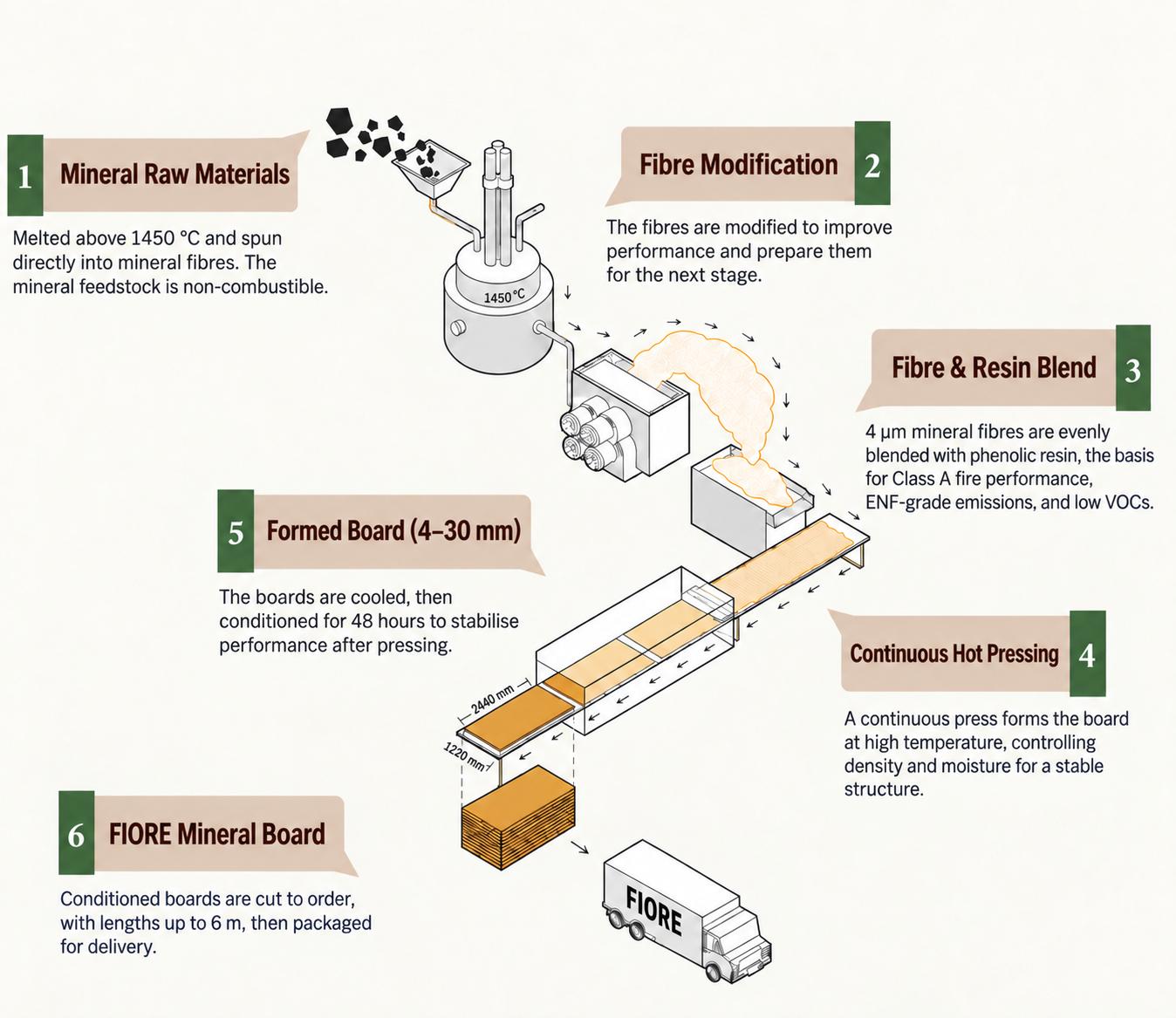
Our dry mineral-fibre air-laying and hot-pressing process follows the technology route widely used in Europe. Melting and fibre formation take place in one continuous thermal process, eliminating a separate remelting stage.
Deep purification removes impurities at their source, helping address leaching, discolouration, efflorescence, moisture-related bulging, swelling, and heavy-metal concerns associated with conventional inorganic boards. This gives FIORE’s dry-process core a cleaner, more stable foundation.
Mineral is melted at high temperature and directly formed into fine fibres with low slag content.
Two-stage opening and separation remove slag and impurities, helping reduce leaching and efflorescence.
The prepared fibre blend is modified to strengthen its bond with the adhesive system.
Dry adhesive application and controlled fibre laying enable precise dosing without moisture variation.
Continuous pressing produces even density, consistent thickness, and a dense, stable structure.
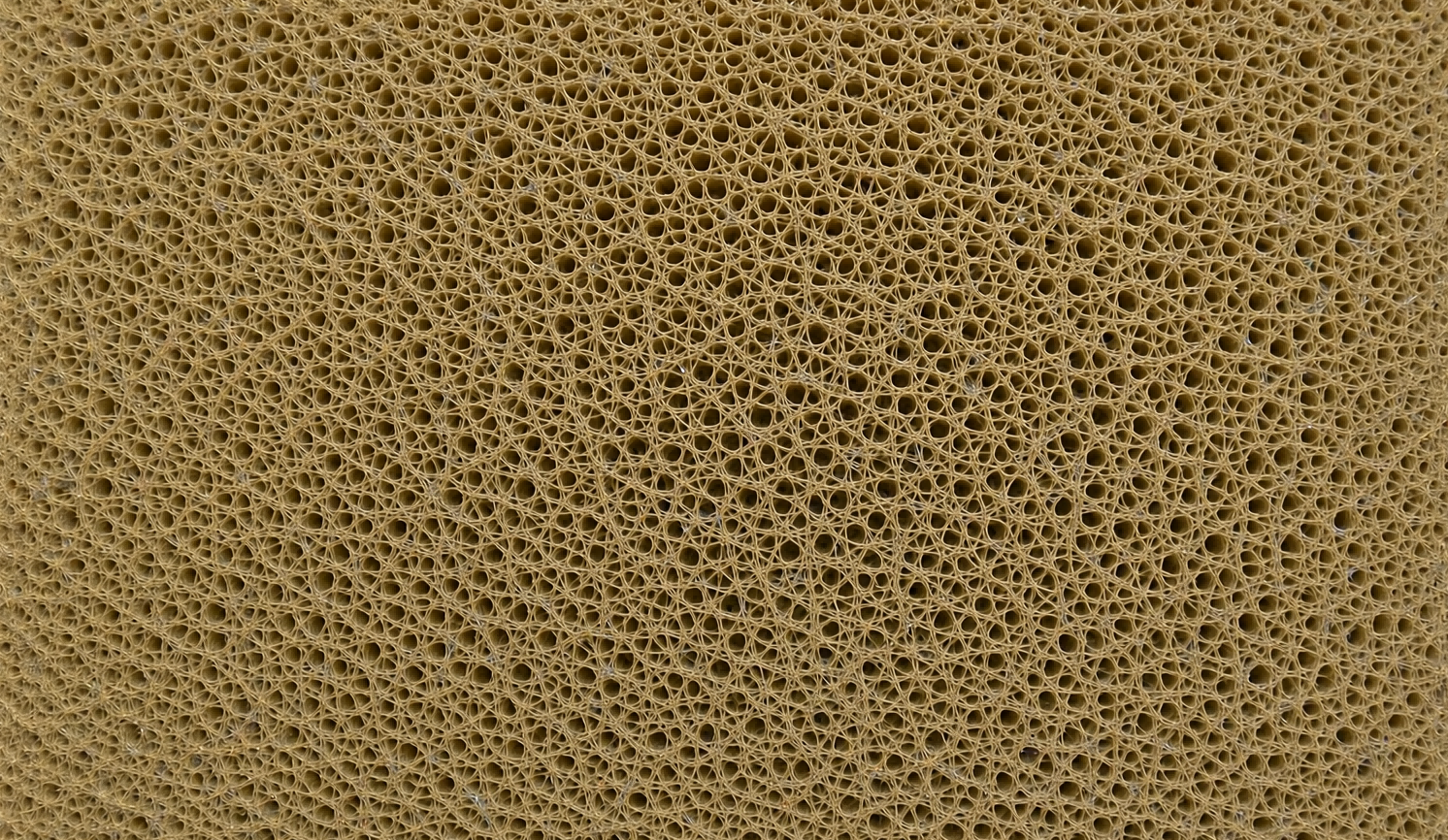
MICROSTRUCTURE
A smooth, dense face surrounds a uniform microporous interior. Tiny pockets of still air help the same mineral core provide both heat retention and sound absorption.
Pockets of still air slow heat transfer, helping moderate indoor temperatures and support efficient heating and cooling.
The microporous structure absorbs and dissipates sound energy, particularly at mid and high frequencies.
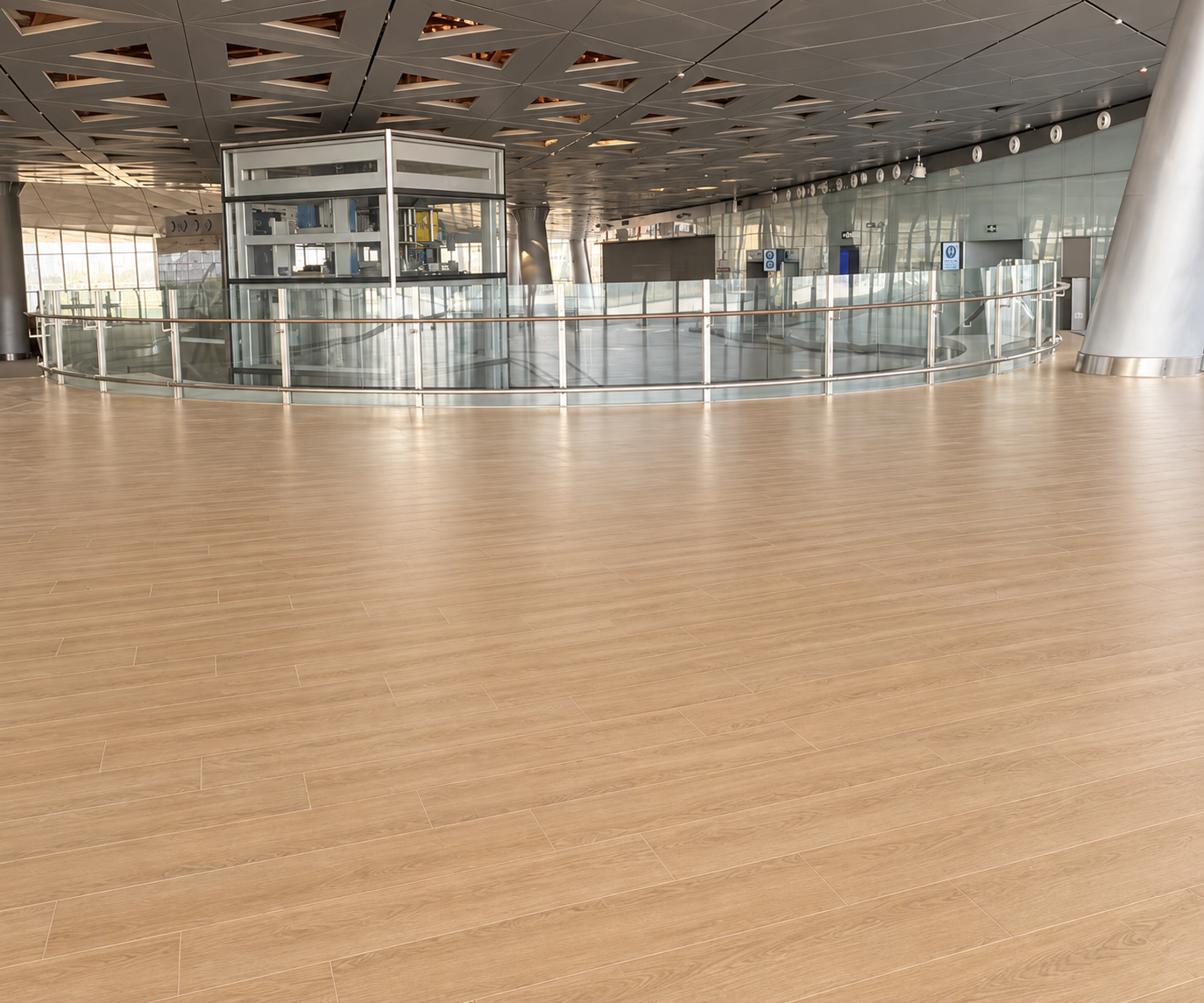
For offices, healthcare, schools, and homes where quieter, more comfortable interiors matter.
For healthcare, schools, family spaces, and homes with demanding indoor-environment requirements.
Third-party and spot testing help match the material’s fire performance to the project specification.
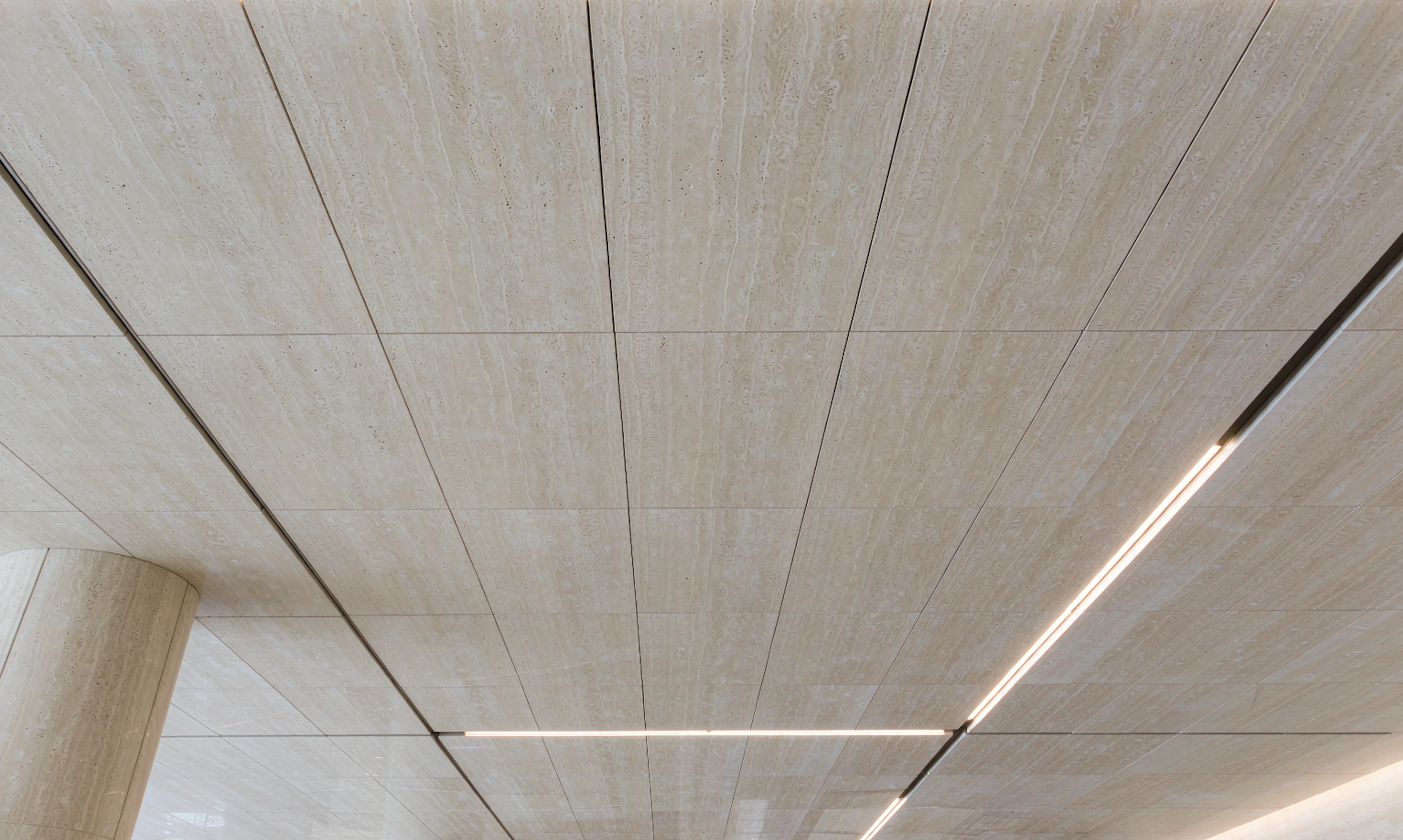
Long runs of close-fitting panels depend on dimensional control built into the material itself.
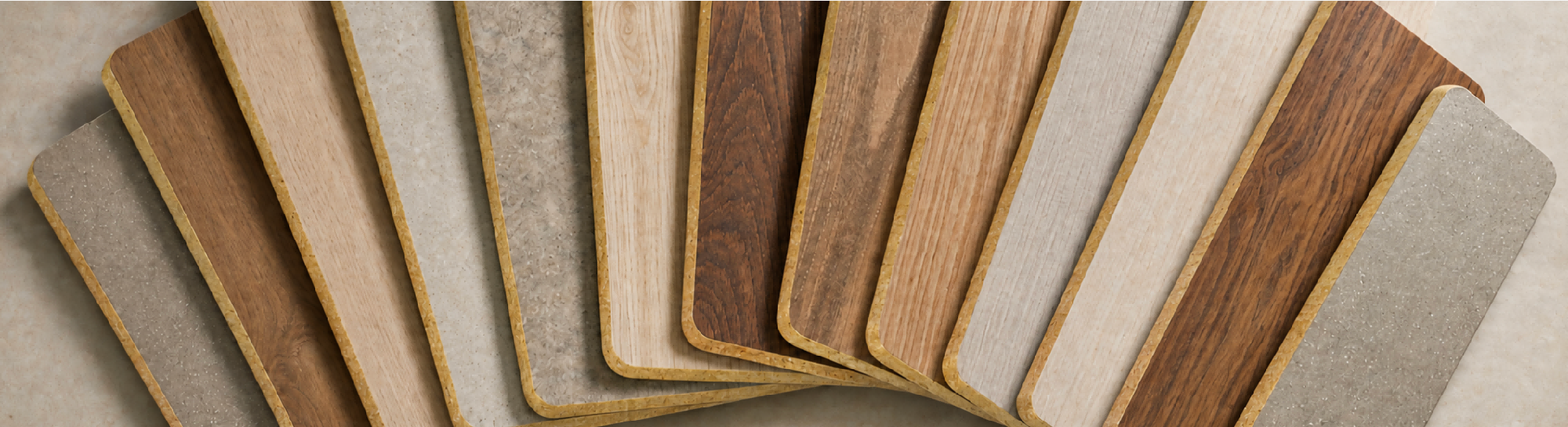
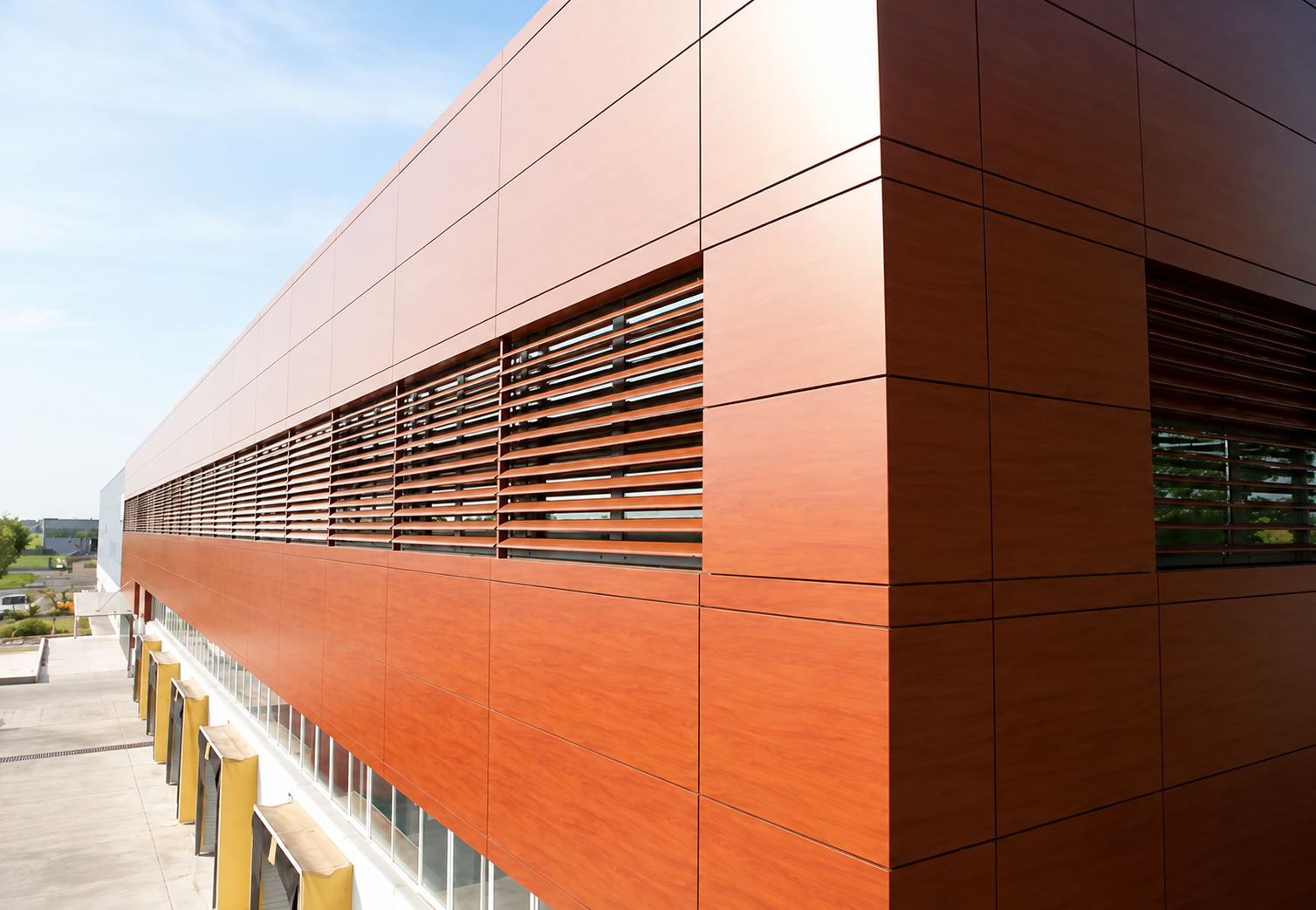
An even-density core and smooth surface allow melamine-impregnated decorative paper to be hot-pressed directly onto the board, without a primer or additional levelling.
Choice of Finishes · Wear and Stain Resistance · Strong BondingFABRICATION
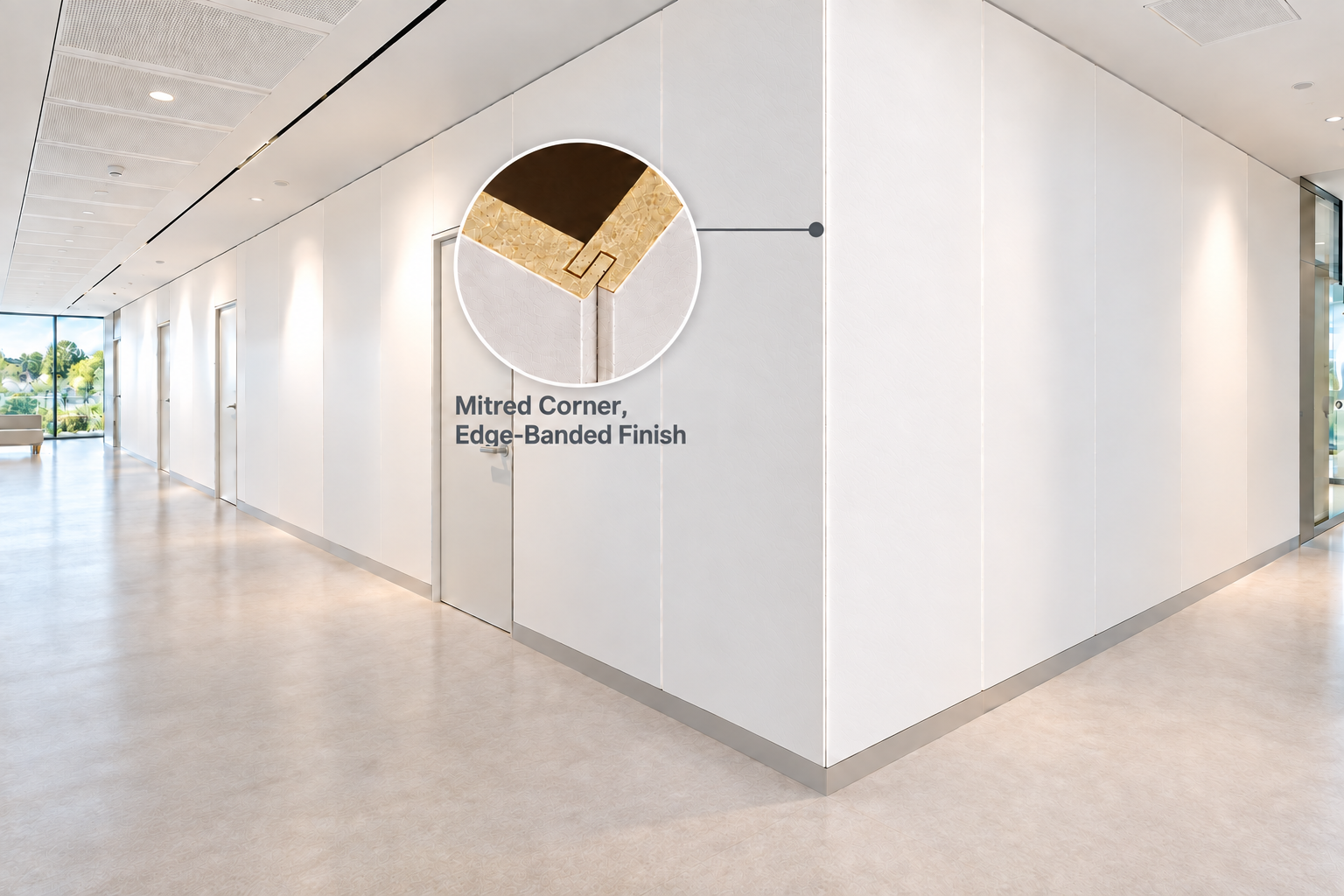
Saw, groove, drill, bond, edge-band, and shape the board using standard woodworking equipment.
15% Lower Tool Wear · Resists Breakage · Clean EdgesResults relate to the tests shown. Refer to the report for the specific product supplied.
Swipe to explore the full table →
| Property | Value | Reference Standard |
|---|---|---|
| Density | 1.25 g/cm³ | GB/T 17657-2022 |
| 24-Hour Thickness Swelling | 0 | GB/T 17657-2022 |
| 24-Hour Water Absorption | ≤3.0% | GB/T 17657-2022 |
| Bending Strength | ≥22 MPa | GB/T 17657-2022 |
| Modulus of Elasticity | ≥4000 MPa | GB/T 17657-2022 |
| Internal Bond Strength | ≥1.2 MPa | GB/T 17657-2022 |
| Screw-Holding Strength | ≥1200 N | GB/T 17657-2022 |
| Impact Strength | ≥3 kJ/m² | GB/T 7019-2024 |
| Formaldehyde Emissions | ≤0.025 mg/m³ | GB 18580-2017 |
| Total Volatile Organic Compound (TVOC) Emissions | 0.1 mg/m²·h | GB/T 29899-2024 |
| Radioactivity Index | ≤0.6 | GB/T 6566-2010 |
Swipe to explore the full table →